“Jackson keeps, Stanley in front of him, TOUCHDOWN! LAMAR!” It’s a great time to be a sports fan in Baltimore. The Ravens have had one of the longest active running championship windows in all of sports that spans back to 1999, (Even if they’ve had a lack of recent postseason success). And the Orioles have perhaps the most promising future in all of baseball and they’re coming off a 101 win season in 2023. While everything is all daisies and sunshine now, (Note: I won’t mention the Bridge Collapse until the Charm City Beasts special event this weekend) we have to reflect and remember the most devastating night in the city’s history. It’s been exactly 40 years since an incident that will probably never ever happen in sports again. Something that can best be described as truly despicable. Something that can be referred to as “The Move.”
“The End of the Baltimore Colts: 40 Years Later”
The Baltimore Colts were considered one of the most iconic franchises in sports for most of their existence. From 1957-1971 they enjoyed 15 consecutive winning seasons, which was a then NFL Record. The accomplishments this team achieved were remarkable. Beating the New York Giants in Overtime of the 1958 NFL Championship Game, in what was and is still referred to as the Greatest Game Ever Played. (“If you know what you’re doing, you don’t get nervous. I knew what I was doing.” -Johnny Unitas) They would win a 2nd straight championship the following year by beating those same Giants in a rematch at Memorial Stadium. Even though they suffered one of the most devastating losses in sports history in Super Bowl III against the New York Jets, (The unleashing of the Deal with the Devil) their 1968 season was one for the ages. With backup QB Earl Morrall, who just so happened to win the NFL MVP, the Colts battered every opponent into complete submission. Not to mention their defense gave up a then NFL Record 144 points in a 14 game season. Two years later they would win it all again on a Jim O’Brien field goal against the Dallas Cowboys in what became known as the Blunder Bowl. Think of all of the great players that donned that Colt horseshoe; Johnny Unitas, Raymond Berry, Lenny Moore, Gino Marchetti, John Mackey, Mike Curtis, Jim Parker, and of course the legendary coaches known as Weeb Ewbank and Don Shula. In fact they were the only team in the NFL that played home games at 2PM instead of noon or 1PM. The reasoning was the Colts wanted to make sure that both the players and fans had time to go to church on Sunday mornings. In the words of Gerry Sandusky, the longtime voice of the Baltimore Ravens, “Sunday’s started with God, and they ended with God.” God being Johnny U. He invented things that are massively used in today’s NFL. He created things like the 2 minute drill, timing patterns, the 3-step-drop, the 5-step-drop, calling plays at the line of scrimmage, and even though it wasn’t used often back in his day, the no huddle offense. Not to mention they also had quite possibly the most intimidating home field advantage that any team has had at any time. During that 15 year span, the Colts won over 80% of their games at Memorial Stadium. Anyone who sat in that horseshoe on the closed end of the stadium wasn’t a passive spectator, they were an active participant. Many of the old traditions that the Colts had like the Marching Band, and the superfans spelling out the name of the team, the maddening noise of the crowd, plus the nickname of “The World’s Largest Outdoor Insane Asylum” have been carried over to the Ravens and M&T Bank Stadium.
But when did things begin to take a turn, when did this model franchise that had so many riches begin its downfall and end up being relocated in an unthinkable manner? You have to go back to 1971. The Colts were making another serious push towards the Super Bowl. In the 1st Round they went into Cleveland and hammered the Browns into Lake Erie right from the opening kickoff. Then came the AFC Championship against division rival Miami. What happened? They got routed. And I mean routed. What everyone saw during that game was an aging franchise that had run its course. You know what would have really helped? Had they not lost to the 5-8 Patriots on the final day of the season, if they had managed to win that game, they wouldn’t have had to travel to their house of horrors that was the Orange Bowl. Instead they would have had the Dolphins and Don Shula back at Memorial Stadium. But that’s a what-if scenario. That loss to Miami was considered the beginning of the end. But then came a bizarre turn of events that would ultimately be the moment where the Colts as a franchise jumped the shark. In July of 1972, owner Carroll Rosenbloom decided to pull off a switcheroo, which allowed him to become the owner of the Los Angeles Rams. Not gonna blame him, he wanted a new challenge and wanted the bright lights of LA. That is understandable, but what makes this move one sided in favor of the Rams, was the owner with whom he was switching teams. That happened to be Robert Irsay, who had bought the Rams from Dan Reeves just a year earlier. (No not that Dan Reeves). More on him later. Although I will say the one thing that the two owners should have done was not only exchange their front offices, but swap their rosters and coaching staffs too. Why do I say this? Because Rosenbloom went to a Rams team that still had the Fearsome Foursome, and a talented roster to work with. What did Irsay get? A declining football team. In 1972 the fears of the franchise hitting a decline were proven to be true. The Colts had indeed fallen off of a cliff. When the most memorable moment was Johnny Unitas’ final sendoff in a season where he was benched for Marty Domres, you know things really went south. It all started when the defense gave up basically 500 yards passing against Joe Namath, the most wanted man in town in Week 2. (Baltimore teams getting exposed by former coaches and assistants, a tradition as old as time). Then (BOOM!) Bring out the nukes. “Determined to make his venture a long term success, Irsay hired the dynamic Joe Thomas as General Manager.” This was the jolt the organization needed. Even if he traded away 28 of the 40 players on the 1972 roster in the offseason, Thomas’ reputation at the time was one of the best in the league. He had built the Miami Dolphins from an expansion laughing stock to the Greatest Single Season Team in NFL History.
After finishing off the Perfect Season, Thomas left South Beach for Baltimore on a quest to prove that it was he, not Don Shula, who built the fish into a superpower. There was one problem. He was not well received by the fans in Charm City. “Some people say that Nixon’s Saturday Night Massacre was nothing compared to Joe Thomas’ Baltimore Massacre when you let Johnny Unitas and other old legendary heroes go.” (Thats what Regis Philbin said on NFL Today in 1973). That right there was how the grouchy Marylanders felt of Thomas during the summer of 1973. Even if he and Irsay dismantled the team, they would be responsible for turning the franchise around within two years. Following two ugly seasons in ’73 and ’74, Thomas made a hiring that resurrected the franchise. Howard Schnellenberger wasn’t going to cut it as a head coach at the NFL level, so he decided to skip town and head towards Miami where he would turn the U into an empire almost overnight. To replace him, the Colts hired George Allen’s longtime right hand man as their next head coach. Ted Marchibroda may have had no head coaching experience, but there were two things he preached. Discipline and structure. Things that the Colts had lacked for the last five years. The hiring would eventually pan out. After starting 1-4 in 1975 the Colts won 9 straight to capture the AFC East Title from those pesky Dolphins. This likable cast featured Bert Jones, Roger Carr, Lydell Mitchell, plus a few leftovers from the Shula Era like Mike Curtis. Their Cinderella Story was dubbed “The Miracle on 33rd Street.” However, it would be short lived. Despite Baltimore’s rise back to being Super Bowl Contenders, the Shake N Bake Colts would be victimized by the blast furnace known as the Steel Curtain. In back to back seasons, Pittsburgh would knock this likable cast out of the playoffs in dominating fashion. Heck in one of those games a plane crashed into the upper deck at Memorial Stadium for crying out loud. (Luckily no one was injured). Then came Christmas Eve 1977. One of the most memorable games played during the 1970s. The Colts were facing the defending champion Oakland Raiders in a heavyweight clash. Despite being 3.5 point underdogs at home, the Colts played inspiring football. They matched John Madden’s squad blow for blow for 60 minutes. They held a 31-28 lead with just over two minutes to play. But their fate would be decided by the most iconic pass pattern nickname ever. “Branch left, Biletnikoff to the right, back again, straight drop back, pumps once, he goes medium deep to Casper, CASPER MAKES AN OVER THE SHOULDER CATCH!” The Ghost to the Post. That pass by Ken Stabler and that catch by Dave Casper along with a chip shot field goal helped send the game into OT, in which the Raiders would win in double overtime thanks to the ghost catching a corner route in the North End Zone for the game winner. Even though it wasn’t a devastating loss because the Colts fared better than almost anyone expected, it was their final moment in the sun.
This was where all the controversy and relocation rumors kicked in. By the end of the 1970s and into the early 1980s, the Colts best years were behind them. In ’78 and ’79, the team was plagued by injuries, and thanks to finishing 5-11 in each of those seasons, Ted Marchibroda was sent to the guillotine. The worst of those two years was in ’78 when Bert Jones got injured in the preseason and they got outscored 80-0 in the first two games. (They could have had Noll or Landry coach those two teams and they still wouldn’t have made the playoffs). 1980 was ok. They started the year 7-6 with Bert Jones finally healthy for once. (BOOM!) Then the roof caved in and they lost their final three games to finish with a 7-9 record. Little did everyone know that this collapse would lead to the most agonizing season in Colts history. Their 1981 season was hilarious for how awful it was. Statistically this may have been the worst team in NFL history. They gave up a record 533 points, and if not for the New Orleans Saints would have scored the fewest points in the league. They also set records for worst point differential, most 1st Half points allowed, fewest punt returns, most 1st Downs and most touchdowns allowed, as well as having a then record for fewest yards allowed until the 2008 Lions shattered that record. The only reason this team didn’t go 0-16 was because the New England Patriots were an even bigger gongshow. Look at their Week 16 game at Memorial Stadium. Both teams were 1-13 and you could put together an entire NFL Football Follies video based on this one game alone. Yes the final score was a 23-21 Colts win, but there were a ton of bloopers that took place in this game. (Bert Jones: HEY WHERE’D THE FOOTBALL GO!? Linemen: I DON’T KNOW!) It was a miracle that 17,000 fans showed up for that circus act on that bitterly cold December afternoon.
And it was in 1981 where all of the relocation rumors began to become a reality. You know what’s ridiculous? The rumors of the franchise moving began not even a year after their Super Bowl V victory! That’s because longtime owner Carroll Rosenbloom was trying to get a new stadium any way he could. Memorial Stadium was an iconic venue with tons of mystique to it, but it had severe problems that no fan in this town wanted to admit. First of all the field was basically a dirt lot thanks to the Colts sharing the stadium with the Orioles, which meant that the baseball diamond wouldn’t be removed until late October at the latest. But even then there were still allegations of the field being a mess. Consider a 1970 playoff game against the Bengals. The field was all but unplayable thanks to a rainstorm that hit the Baltimore area during the week, and come that Sunday, the NFL made the Colts paint the AFC and horseshoe logos on the 50 yard line and in the endzones. Having the AstroDirt may have worked for the Colts that postseason but the league and Rosenbloom didn’t like it. The playing surface problems were not the only issue surrounding the stadium. Ten thousand seats inside the lower level had poor views of the field; twenty thousand seats were out-dated bench seats that had no back support; seven thousand seats were poorly constructed temporary bleachers that were installed for football games only. There was not enough office space for the front offices for both the Orioles and the Colts. Both teams had to share locker rooms which had four showers, no stalls, and had the commode inside the room with no partitions. And to top it all off, the upper deck did not circle the entire field ending instead at the 50-yard line. In 1972 their lease on the stadium was set to expire. Rosenbloom personally was looking to get out of Baltimore so he wouldn’t be labeled as the man who took one of the proudest organizations in sports out of their beloved home. (Fun fact: His wife did the same thing in 1995 when the Rams left LA for St Louis). So after weeks of discussion, Rosenbloom and new Rams owner Robert Irsay swapped franchises. Even with new ownership the rumors would kickstart again.
In 1974 during a season in which the Colts went 2-12, the first stadium proposal in Baltimore took place. Their plan was to build a one of a kind structure on the site of where M&T Bank Stadium stands today. They called it the Baltodome. The idea was to have it host the Colts, Orioles, and a potential NBA or NHL franchise. The capacity would be 70,000 for football, 50,000 for baseball, and 20,000 for basketball and hockey. The total cost was expected to be around $78M to build. There was one problem. Maryland Governor Marvin Mandel did not like it at all. Both Irsay and Orioles owner Jerold Hoffberger each had their own opinions on this. Hoffberger said “I will bow to the will of the people. They have told us what they want to tell us. First, they don’t want a new park and second, they don’t want a club.” Luckily for the fans, Hoffberger would sell the team in 1979 to Edward Bennett Williams. It took a while for the Orioles but they would eventually reach an agreement in 1988 to build a new ballpark downtown. (Thus giving us The Ballpark That Forever Changed Baseball). As for Irsay he wasn’t as impulsive as Hoffberger but he made his point very clear. “It’s not a matter of saying that there will be no stadium. It’s a matter of getting the facts together so everybody is happy when they build the stadium.” He also mentioned that “once the Superdome in New Orleans and the Kingdome in Seattle open, you’ll see why we need a new stadium.” He was right about the Superdome, especially since it’s still in very good shape almost 50 years later, and is going to host Super Bowl LIX next February. (Baltimore fans know a lot about that building). The Kingdome on the other hand was a massive dump from the moment it was built and the only significant things that came out of that stadium was Ken Griffey Jr, and the 12th Man.
By 1975, Irsay was already searching for other cities that would be interested in taking the Colts away from Baltimore even if he was constantly trying to get his wish of building the Baltodome, or having a massive overhaul to Memorial Stadium. There were four cities that he looked at; Phoenix, Jacksonville, Memphis, and of course Indianapolis. The next year he made a serious effort to move the franchise to Phoenix, and then he backed out at the 11th hour. He said “I like Baltimore and want to stay there long term, but when are we going to find out something about our stadium? I’m getting offers from other towns to build me a new stadium and give me other inducements to move there. I don’t want to but I’d like to see some action in Baltimore.” The pressure was on. Irsay was yapping at the government at least five times a day to give him enough money and resources to build that dome. And it was in 1976 when the NFL decided to go into expansion. Both Memphis and Indianapolis were near the top of the rankings for who would get the 27th and 28th NFL franchises. In the end the winners were Tampa Bay and the aforementioned Seattle. Fortunately for Colts fans, the Rooney Family were the architects as to why Indy and Memphis never got expansion teams. The turning point of the rumors surrounding Indianapolis came in 1979, when William Hudnut was elected as mayor. One of the first things he did after being sworn into office was to construct a 65,000 seat structure to try and lure the Colts or another franchise over to town. The final cost to build the RCA Dome was $77.5M. Both Hudnut and civic leader Robert Welch appointed a committee in 1980 to study the feasibility of building a new stadium that could serve primarily as a boon to the city’s convention business and, secondarily, as a lure for an NFL team over to Indy.
As for the Colts themselves, they were still in a rebuilding phase, although they did receive plenty of controversy. In the 1982 Draft they drafted Johnie Cooks 2nd overall who became a serviceable linebacker for them over the next few years. Then came the move that everyone has mocked Irsay for since. The Colts had a second 1st Round pick to work with, and they had traded Bert Jones two weeks prior to the draft. What did they do? They sent a king’s ransom of mid-late round picks to their old owner Carroll Rosenbloom to move up to #4 to draft Jones’ successor. I wonder who it’ll be? “Baltimore Colts select from the Rams spot, Quarterback Art Schlichter, Ohio State.” YOU DRAFTED A PROFESSIONAL GAMBLER!
If you thought that was bad, it gets even worse. In that same draft, they took Mike Pagel in the 4th Round out of Arizona State, and new coach Frank Kush named Pagel the starter after Schlichter had a bad showing during Training Camp. To be fair neither of them was going to thrive especially since the team was still pretty bad, and luckily the ’82 season was shortened by a players strike. The next year on Draft Day would be even worse for Colt fans. At first it was a day of great hope. They held the #1 Overall pick in the 1983 Draft, and luckily for them even if they already had Schlichter and Pagel on the roster, there was a potential generational talent waiting to be selected. Hailing from Stanford University, an amazing athletic QB with a rocket arm. His name? John Elway. And Baltimore had no choice but to select him first overall. But then came the unthinkable. Elway refused to come to Baltimore primarily because he didn’t like Kush’s system, and he didn’t want to be on the other side of the country away from family. But do you want to know what the real reason was? (DRAMATIC MUSIC) IRSAY! Not only because of the rumors of relocation to Indianapolis, but also because Irsay ran Unitas and Bert Jones out of town by bringing in conditioning coaches who messed up their mechanics and diminished their confidence. (This was Steve Saunders, before Steve Saunders). Luckily for Elway, he was quickly shipped to Denver for a massive package. And yes the Colts acquired Chris Hinton who would become one of the best Offensive Linemen in the NFL for a decade (I’m shocked he isn’t in the Hall of Fame) but the damage was done. Although I will say this. Elway would not have been the player he became had he stuck in Baltimore. Frank Kush would not have developed him the way Dan Reeves did with the Broncos and he probably would have put him in the same QB controversy with the other two guys. The Colts were lucky to go 7-9 in 1983 despite a massive lack of talent on either side of the ball and having just traded what could have been their savior in the eyes of the fans.
But the worst was about to come. On January 20, 1984, Irsay would hold a press conference with Baltimore News affiliates who asked him what his plans were going forward. One reporter asked him if he still had thoughts of moving the team out of Charm City. Irsay’s response to that question would become one of the most infamous quotes in Baltimore history. “I have not any intentions of moving the (CENSORED) damn team. If I did, I would tell you about it, ok.” This right here is why everyone in this city accused him of being a liar and that still remains true 40 years later. Every time he made it clear to the public that he wouldn’t take the Colts out of town, he would start up the talks of moving the franchise. A week earlier, he met with Phoenix City Officials about the possibility of renovating Sun Devil Stadium as a way to lure the Colts to the desert. But then he threw a pie in their faces and ditched them at the altar. AGAIN! With Pete Rozelle announcing that the expansion rumors for 1984 were being put on hold, the only way for Indianapolis or Phoenix to get a team was if they made an offer Irsay couldn’t refuse. Indy’s solution was clear. They must contact Colts officials in order to take negotiations between the club and Indianapolis to the next level. That’s exactly what Herb Simon, the owner of the Indiana Pacers did. As legend has it, Hudnut then assigned deputy mayor Frick to begin secret negotiations with Colts counsel Michael Chernoff. Despite the rumors swirling around like never before, the issue Indy would face wasn’t anything they did, but what Baltimore was about to do. On March 27, the Maryland Senate passed legislation giving the city of Baltimore the right to seize ownership of the Colts by eminent domain, an idea first floated in a memo written by Baltimore mayoral aide Mark Wasserman. In the eyes of the fans it looked as if the Colts weren’t going anywhere. Wasserman was considered the savior that they hadn’t had since Unitas. But while everything was all daisies and sunshine for the fans, the unthinkable was secretly being plotted out step by step.
“SIKE SIKE IRSAY RIDES A BIKE IN THE MIDDLE OF THE NIGHT WITHOUT A FLASHLIGHT!!! SIKE SIKE IRSAY RIDES A BIKE IN THE MIDDLE OF THE NIGHT WITHOUT A FLASHLIGHT!!!“
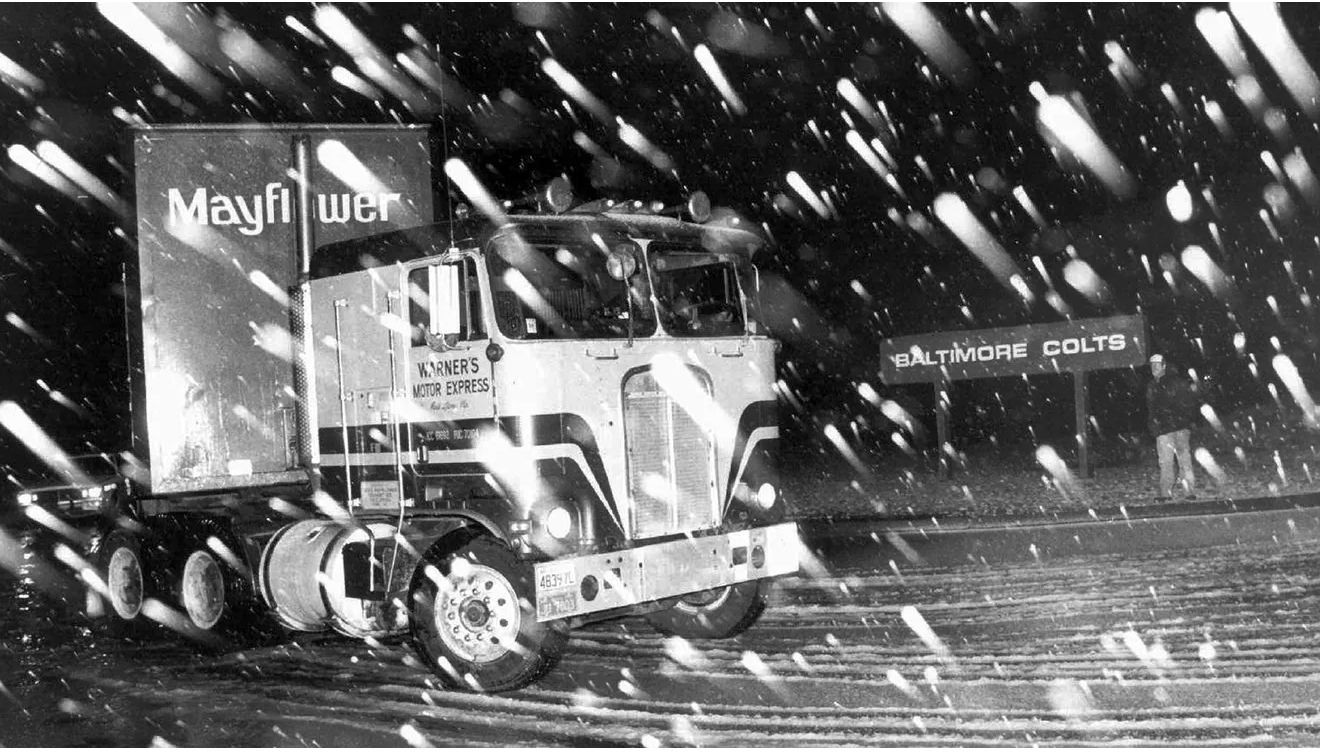
And that’s exactly what he did in the middle of the night. He also called Hudnut and ordered him to send as many moving trucks to the Colts facility in Owings Mills as possible to gather all of their stuff. (You can thank John Smith the CEO of Mayflower for doing so). Fifteen Mayflower trucks left Indiana for Baltimore shortly after Irsay agreed to the offer from Hudnut, which included the RCA Dome, a $12.5M loan, as well as a $4M training facility. The two men soon discovered that if they didn’t move all of their stuff quickly, new Maryland Governor Harry Hughes would sign the eminent domain bill, thus allowing the city to take possession of the team. (The bill was passed 103-19 but that was after they left town). Eight hours after they packed up all of the equipment inside the facility, the announcement was made clear by Hudnut. “Ladies and Gentlemen it’s my understanding that the Colts are on their way to Indianapolis.” HEARTS! RIPPED! OPEN! If the weather that day wasn’t miserable enough thanks to an uncharacteristic snowstorm, the looks on peoples faces were. You know what added insult to injury? Each of the 15 trucks took different routes! They knew that if they were all going in one huge line, people would take offense and the trucks would be in harm’s way immediately. By the time they got near Indianapolis police cars escorted the trucks to where the Colts practice facility would eventually be located. While Indy celebrated in front of a pep rally of 20,000 people two days later inside the RCA Dome, Baltimore residents were in absolute shock. William Donald Schaefer, the mayor of Baltimore who was in the process of running for Governor, was in tears when he was interviewed on local television. “I’m trying to retain the little dignity I have left in this matter. Second, if the Colts had to sneak out of town at night it degrades a great tradition of the city in football.”
To me it’s the most devastating move in the History of Sports. We’re never going to see something like this ever again. There’s no way that something like this would occur today especially with Social Media. If someone tried pulling this act again, they would be spotted in an instant. Now I see why the Angelos Family recently sold the Orioles. If they along with new owner David Rubenstein didn’t come to terms with Governor Wes Moore, and city officials on a new lease for Oriole Park at Camden Yards, they would have tried taking the Orioles out of Charm City in the middle of the night and moved to Nashville. Look at the impact that this move had on Baltimore. The city went over a decade without an NFL franchise, yet the Colts Marching Band would still keep playing even though they didn’t have a team. Even though Baltimore had a USFL and a CFL club it wasn’t nearly the same. The Orioles were the only game in town, and even they were on the verge of moving to Washington DC in the late ’80s. The most notable thing the city had accomplished sportswise from that time frame was the CFL’s Stallions winning the Grey Cup in 1994, only for them to move to Montreal after the 1995 season.
The reasoning behind the Stallions move to Canada and the events that followed can be best described by one declaration by Parris Glendening on November 6, 1995. “Ladies and Gentlemen, WE HAVE A SIGNED CONTRACT AT HAND! The Browns are indeed coming to Baltimore.” Funny how things work. Baltimore loses a franchise in devastating fashion, yet gains one in the same fashion. Unlike Irsay, Art Modell had done so much for the NFL during his time as the owner for the Cleveland Browns especially in terms of marketing the NFL and helping to make the league must-watch television. The reason Modell left Cleveland was because he was broke, he didn’t have enough money to build a new stadium or renovate Cleveland Municipal, and he was outraged by the construction of Progressive Field, the Rocket Mortgage Fieldhouse, and the Rock and Roll Hall of Fame. (Seriously, they built that instead of a football stadium). Even though Cleveland was devastated by the move, Modell did make them a promise. He would leave their name, history, and colors behind so that the NFL would give them an expansion franchise and a new stadium on the former site which would be ready in time for the 1999 season. And even though they had moved from Cleveland, Modell and that franchise would have a new identity. They would start from scratch even though they had some players and coaches left over from their days in Cleveland, including new GM Ozzie Newsome, and team president David Modell. Exactly 12 years to the day of the Colts move, Modell would announce the naming rights to Baltimore’s new attraction. “Ladies and Gentlemen, fans, and friends, the Baltimore Ravens.” And so began the rebirth of football in Baltimore.
When I look back on the two moves there are a couple of things that jump out. Irsay took the name, history, and colors with him to Indianapolis, and left Baltimore with basically nothing. (Bud Adams did the same when he moved the Oilers to Tennessee). That to me was the worst of it all. When you visit the Pro Football Hall of Fame, all of the Hall of Famers are labeled as Indianapolis Colts. Johnny Unitas never played in Indianapolis, neither did Raymond Berry, nor Bubba Smith, nor John Mackey. The Greatest Game Ever Played was not an Indianapolis victory. In the words of Mike Stysley, a longtime Colts and Ravens season ticket holder, “For Indy to take that and keep that is just sick.” Modell, as mentioned, left everything behind in Cleveland for the new franchise to assume, and every time the Colts and Ravens play against each other, especially at M&T Bank Stadium, high emotions from the fans in Charm City spill over. You want to know what my favorite point of view on the Colts move from Baltimore and the emotions that the fans have or had especially now that it’s been 40 years since then? Gerry Sandusky, the longtime voice of the Ravens, and one of my idols to this day said it best on his segment on Outside the Lines prior to the 2006 Divisional Round clash between the two teams;
“It’s a wild intersection where emotions are destined to collide in ways nobody can ever predict when they see the blue Colt horseshoe come back to town. And Jeremy earlier in the show, you used the phrase the Colts are coming back home, they’re not coming back home! THIS IS THE HOME OF THE BALTIMORE COLTS! It was never the home of the Indianapolis Colts, this is sacred ground for names like John Unitas, for names like John Mackey, from my dad John Sandusky, and for all of the people who were part of that Baltimore Colt organization. And the biggest emotion we have when the Colts come to Baltimore, is that the Baltimore Colts and all the great men who were part of that organization don’t have a final resting place.”
The one thing that people have a hard time understanding is this. Why does no one in the media and in the NFL League Office hate the Colts for moving from Baltimore to Indianapolis the way they did, yet hate the Ravens for the same reasoning? That to me is simple. First of all Canton, OH is the birthplace of the NFL, and for a team especially with one that had the history and proud winning tradition that the Browns had at the time to leave that area and move elsewhere is considered despicable. The other big reason is that Art Modell as mentioned was a big reason for the NFL’s rise to being America’s Ultimate Sport. All of the money for primetime games, and TV contracts that the league had for so many years? Modell was one of the owners behind all of this. Third, just five years after leaving Lake Erie, the former Browns aka the Ravens would capture Super Bowl XXXV, the first of their two championships on the backs of the Greatest Single Season Defense of All Time. While many people say that the Ravens were giftwrapped a championship roster from the time they arrived in town in 1996, they forget to realize that Modell and Newsome were forced to gut everything and start over. The only two players on the Ravens Super Bowl XXXV team that were on the 1995 Browns team were Matt Stover and Rob Burnett. Think about it this way, no matter who the Ravens have had over the years, and no matter how good they’ve been despite having a run that only New England and Kansas City can claim is better, the NFL Front Office and Mainstream Media will never adore them the way they do other franchises. I know you’re going to say that it’s discrimination towards Lamar Jackson and his status coming out of college, but it’s not. Think about this. Joe Flacco never got hailed as a media darling during his time in Baltimore despite making five AFC Championship Games and winning a Super Bowl. Last year in Cleveland, the media was labeling him as the modern-day Kurt Warner, and some Browns fans want a statue of him built outside of FirstEnergy Stadium for crying out loud. He got more love there than he ever did in 11 years with the Ravens. It comes to show you that the media hates that franchise because of what Art Modell did to Cleveland.
As for the Colts, they too would experience success on the field. Even though it took them until 1995 to win a playoff game, as well as them having to watch their former hometown win a championship before they were given the chance to do such honors, Indianapolis put together its most impressive stretch since the Unitas Era. Led by Peyton Manning, Marvin Harrison, plus a great supporting cast around them on both sides of the ball, the Colts would make the playoffs in 14 of the next 16 seasons, including 10 division titles, 2 Super Bowl appearances, and a victory in Super Bowl XLI. Even though there is a statue of Johnny Unitas outside of M&T Bank Stadium in Baltimore, that didn’t stop Indy from doing the same with their iconic QB as well. As for the head to head rivalry especially at M&T, the Colts and Ravens have traded some memorable moments over the years. In their first ever meeting in 1998, the Ravens led by former Colts QB Jim Harbaugh erased a 14 point deficit to beat Indy 38-31. In the 2006 postseason, Adam Vinatieri outdueled Matt Stover five field goals to two as the Colts defense forced four backbreaking turnovers including two inside their 20 yard line. Billy Cundiff tried to copy Vinatieri in 2009, but thanks to a late rally by Manning, Indy escaped town with a 17-15 win. But the Ravens would get their revenge in 2012, as they knocked around Andrew Luck in a 24-9 win in what turned out to be not only the start of their Super Bowl XLVII run but also the final home game for both Ed Reed and Ray Lewis.
And to wrap this up, I have one request. I want you to picture the emotions that both Baltimore and Indianapolis had on this historic day 40 years ago, and ask yourself, if I were Robert Irsay, would I have waited for Maryland officials to sign the eminent domain, or would I have bolted out of town? It’s a hard question to answer, so I will let you all answer it for yourselves. As a Baltimore native, its still heartbreaking to have lost the Colts, but we are able to take some solace knowing that we now have the Ravens as our beloved franchise.
 Bragging Rights Sports